


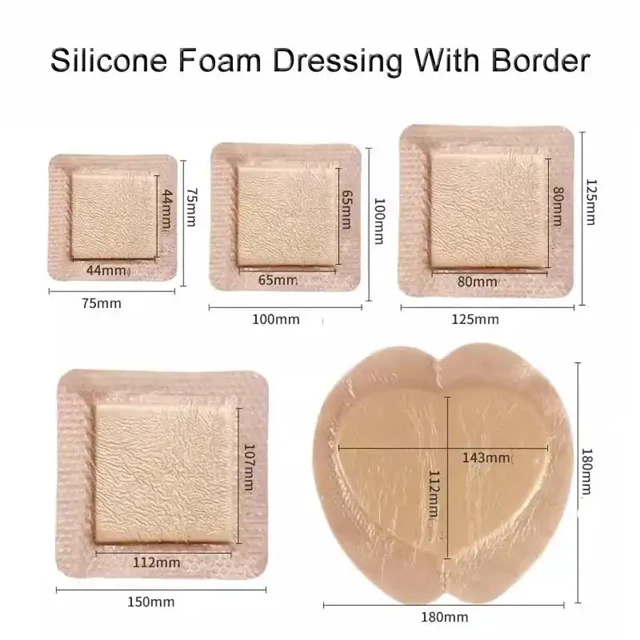


Definition
Silicone Foam Dressing is a novel medical wound dressing that combines silicone with foam materials. It serves to cover and safeguard wounds, creating optimal conditions for wound healing. This type of dressing is widely utilized in the care of various wounds across the global medical field.
Materials
Silicone Layer: Typically made of medical-grade silicone, it boasts excellent biocompatibility, low allergenicity, and high chemical stability. It can make gentle contact with the skin, minimizing the risks of allergic reactions and irritation.
Foam Layer: Usually composed of materials such as polyurethane, it features an open porous structure, offering superior absorption and ventilation capabilities. Moreover, it has a certain degree of elasticity and softness, enabling it to adapt well to the movements and contours of different body parts.
Other Auxiliary Materials: These may include backing materials, which enhance the overall strength and stability of the dressing. Some also come with an isolation layer that protects the adhesive surface of the dressing prior to use, ensuring cleanliness and optimal adhesion during application.
Characteristics
High Absorbency Efficiency: Thanks to the porous nature of its foam structure, it can rapidly absorb a substantial amount of wound exudate. It effectively locks the exudate within the foam, preventing its accumulation on the wound surface. By maintaining a moderately moist environment for the wound, it significantly facilitates the healing process.
Superior Air Permeability: The abundant pores allow for free air circulation, enabling the wound to "breathe". This helps maintain the balance of the local microenvironment around the wound, reducing the risks of infection and skin maceration caused by moisture accumulation.
Softness, Comfort and Conformability: The combination of silicone and foam results in a soft texture, along with excellent elasticity and flexibility. It can closely conform to wounds on various irregular body parts, such as joints and curved areas, without exerting excessive pressure or causing friction on the wound, thereby enhancing patient comfort.
Self-adhesive Property and Easy Removal: The silicone component imparts moderate self-adhesive properties to the dressing, allowing it to adhere firmly to the skin around the wound without the need for additional fixation devices. When it comes to changing the dressing, it can be easily removed without sticking to the wound tissue or causing pain, minimizing damage to the newly formed tissue.
Protective and Isolating Function: Acting as a physical barrier, it effectively isolates external dust, bacteria, and other contaminants, preventing them from entering the wound and reducing the risk of infection. Additionally, it can buffer external impact forces on the wound, protecting it from secondary damage.
Promotion of Autolytic Debridement: It helps maintain a moist wound environment, accelerating the softening and decomposition of necrotic tissue on the wound surface. This promotes the autolytic debridement process, enabling the wound to progress more quickly into the healing stage.
Applications
Burn Wound Care: For mild and moderate burn wounds, it can protect the damaged skin, alleviate pain, absorb exudate, prevent infection, promote wound healing, and reduce the formation of scars.
Trauma Wound Management: It is suitable for various wounds caused by trauma, such as abrasions, cuts, and lacerations. It can absorb the blood and tissue fluid exuded from the wound, providing a moist healing environment that expedites wound repair.
Treatment of Chronic Wounds: In the treatment of chronic, difficult-to-heal wounds such as pressure ulcers, diabetic foot ulcers, and venous ulcers, it can efficiently absorb a large volume of exudate, control infection, stimulate the growth of granulation tissue, and accelerate the wound healing process.
Surgical Wound Care: Used for the care of surgical incisions, it can keep the wound clean, absorb bleeding and exudate, lower the risk of infection, and facilitate the normal healing of the incision. It is particularly suitable for surgical sites with high requirements for dressing comfort and conformability.
Donor Site Wound Care: In skin grafting surgery, it is applied to the donor site wound. It can relieve pain, protect the wound surface, promote the regeneration of epithelial cells, and speed up the healing of the donor site.
Usage Instructions
Wound Assessment and Preparation: Prior to use, medical professionals should conduct a thorough assessment of the wound, including its size, depth, and exudation level. Then, clean the wound with an appropriate cleaning solution, such as normal saline, to remove dirt, necrotic tissue, and residual secretions. Gently pat the wound dry with sterile gauze.
Select the Appropriate Dressing: Based on the specific size and shape of the wound, choose a Silicone Foam Dressing that can completely cover the wound and at least 2 to 3 centimeters of the surrounding healthy skin to ensure adequate protection.
Open the Dressing Package: Carefully open the package, taking care not to contaminate the adhesive surface of the dressing or the surface that will come into contact with the wound, thus maintaining the dressing's sterility.
Apply the Dressing: Place the adhesive side of the dressing towards the wound and gently position it on the wound. Press gently from the center of the wound outward to ensure that the dressing adheres closely to the skin. Make sure to expel all air bubbles, avoiding the formation of wrinkles or bubbles, and ensuring full contact between the dressing and the wound surface.
Fixation and Inspection: If necessary, secure the dressing with medical tape or a bandage to prevent it from shifting or falling off during the patient's activities. After fixation, recheck to ensure that the dressing adheres properly and that the edges are sealed, ensuring complete coverage of the wound.
Dressing Change: Change the dressing regularly according to the doctor's instructions and the actual condition of the wound. Generally, when the dressing is saturated with exudate, leaks, or becomes contaminated, it should be replaced promptly. When changing the dressing, gently peel it off from the edge, avoiding excessive force that could cause damage to the wound. Then, clean the wound and apply a new dressing following the steps above.
Hot Tags: disposable silicone foam dressing, China disposable silicone foam dressing manufacturers, suppliers, factory


