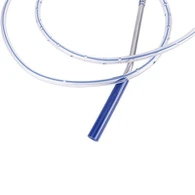
| Yankauer Handle | ||
 |
 |
 |
| Item No. | Size |
| YH01 | Standard Tip, with control Vent |
| YH02 | Standard Tip , without control Vent |
| YH03 | Standard Tip , without control Vent |
| YH04 | Crown Tip , wthout control Vent |
| YH05 | Roundtip , with control Vent |
| YH06 | Roundtip , with control Vent |
Yankauer Handle refers to the handle of the Yankauer suction tip, which is usually used in conjunction with the Yankauer suction tip. The following is a detailed introduction about it:
Structural Composition
Handle Body: It is generally made of durable medical plastic or metal materials. Its shape is designed ergonomically for medical staff to hold easily. It is usually cylindrical or slightly curved, and the surface may have anti-slip textures to increase the grip stability and prevent it from slipping during operation.
Connection Port: Located at one end of the handle, it is used to connect tightly with the suction connecting tube to ensure a good seal during the suction process. Common connection methods include threaded connections and bayonet connections to ensure the firmness and convenience of the connection.
Control Components (Some Have): Some Yankauer suction tip handles may be equipped with control valves or switches and other components. Medical staff can adjust the negative pressure of suction through these control components or temporarily stop the suction to meet different clinical operation needs.
Functional Roles
Guiding Suction: As the gripping part of the Yankauer suction tip, medical staff can flexibly manipulate the suction tip to perform suction operations in the patient's oral cavity, pharynx, and other parts by holding the handle, and accurately place the suction tip at the position where secretions, blood, or other liquids need to be removed.
Adjusting Negative Pressure (Some Have): For handles equipped with control components, medical staff can adjust the negative pressure intensity of suction in real-time according to the specific situation of the patient and operation requirements. For example, when dealing with more fragile tissues or removing thinner liquids, the negative pressure should be appropriately reduced; when removing thicker secretions, the negative pressure can be increased to improve the suction effect.
Facilitating Operation: Its ergonomic design makes medical staff less likely to feel fatigued during long-term operations, enabling more stable and efficient suction operations, improving work efficiency, and also helping to reduce unnecessary harm to patients caused by improper operation.
Characteristics
Durability: Due to the use of high-quality medical materials, the Yankauer suction tip handle has good durability. It can withstand a certain amount of external force and frequent use without being easily damaged, thus ensuring its reliability in clinical applications.
Easy to Clean and Disinfect: To meet the requirements of hospital infection control, the material and surface treatment of the handle make it easy to clean and disinfect. It can effectively remove dirt, bacteria, viruses, etc. on the surface of the handle and prevent the occurrence of cross-infection.
Good Adaptability: It has good adaptability with the Yankauer suction tip and the suction connecting tube, which can ensure the overall performance of the suction system and guarantee the smooth progress of the suction process.
Classification
Classification by Material: It can be divided into plastic handles and metal handles. Plastic handles are lighter in weight, relatively lower in cost, and have good insulation performance; metal handles are more durable and have better heat dissipation performance, but they are relatively heavier in weight and higher in cost.
Classification by Whether There are Control Components: It can be divided into handles with control valves or switches and handles without control components. Handles with control components have more functions and can meet more diversified operation requirements, but their structures are relatively complex and the price may be higher; handles without control components have a simple structure, and the operation is relatively straightforward, which is suitable for some scenarios where the requirements for negative pressure adjustment are not high.
Related Precautions
Inspection Before Use: Before use, carefully check the appearance of the handle for any damage, whether the connection port is clean and free of foreign objects, and whether the connection with the suction connecting tube and the suction tip is tight. If there are any abnormalities, replace or deal with them in time to ensure the safety and effectiveness of the suction operation.
Correct Operation: Medical staff should follow the standardized operation procedures during operation to avoid damage to the handle or harm to patients caused by excessive force or improper operation. When adjusting the negative pressure, it should be done slowly to avoid sudden changes in negative pressure causing damage to the patient's tissues.
Cleaning and Disinfection: Clean and disinfect the handle in a timely manner after use. Select appropriate cleaning agents and disinfectants according to the hospital's infection control requirements to ensure the cleanliness of the surface and interior of the handle and prevent the growth and spread of bacteria and viruses. For reusable handles, conduct comprehensive maintenance and inspection regularly to ensure the stability of their performance.
Storage and Preservation: Store the cleaned and disinfected handle properly to avoid contamination and damage. Generally, it should be stored in a dry and ventilated environment, and avoid contact with sharp objects or other items that may cause damage to the handle.
Hot Tags: yankauer handle, China yankauer handle manufacturers, suppliers, factory