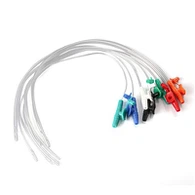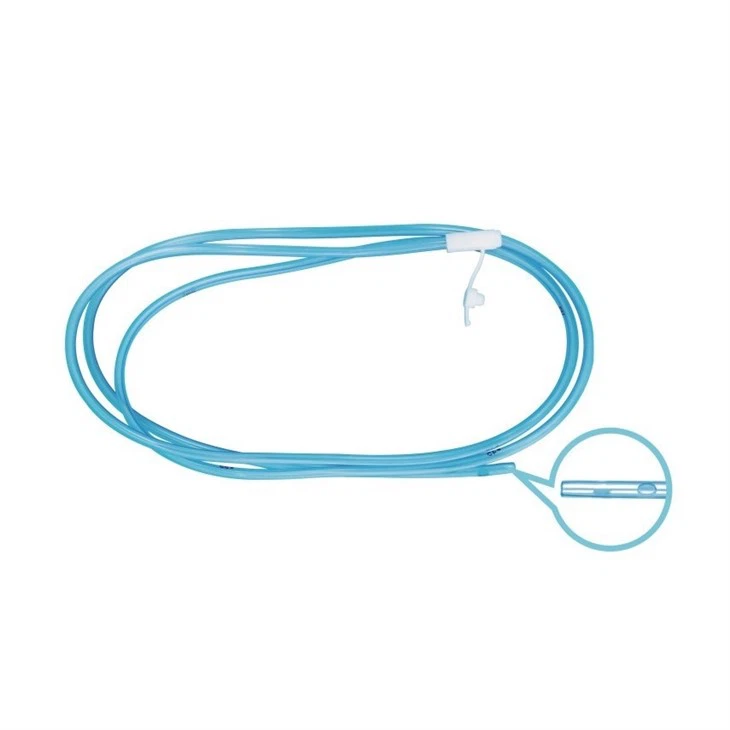


| Item | Size | Package | Length (cm) | Carton Size | PCS/CTN | Note |
| Infant | 4-8 Fr | Blister | 40 | 49 x 23 x 37 cm | 500 | The catheter use ordinary transparent material or elastic abrasive material.lt has development line.And it has marks from14 to 20. |
| Adult | 10-20 Fr | PE | 120 | 62 x 44 x 34 cm | 500 | The catheter use ordinary transparent material or elastic abrasive material.lt has development line.And it has tick marks with 45,55,65 and 75 |
"Feeding tube" is a medical device used to directly deliver nutrients, fluids, and medications into the human digestive system. It is usually used for patients who are unable to meet their nutritional needs through normal eating. The details are as follows:
Definition
A feeding tube is a conduit through which nutrients, water, medications and other substances are delivered directly into the human digestive system for patients who cannot meet their nutritional requirements by normal eating.
Types
Nasogastric Tube: It is inserted through the nasal cavity, passing through the pharynx and esophagus, and finally reaching the stomach. It is commonly used for short-term nutritional support, generally for no more than 4 weeks.
Nasojejunal Tube: Also inserted through the nasal cavity, it passes through the pylorus and enters the jejunum. It is suitable for patients with poor gastric function but relatively normal small intestine function and in need of enteral nutritional support.
Gastrostomy Tube: A small opening is made in the abdomen through surgery, and the feeding tube is directly inserted into the stomach. It is suitable for patients who need long-term nutritional support and have basically normal gastrointestinal function, which can reduce the discomfort and complications caused by long-term nasal intubation.
Jejunostomy Tube: The feeding tube is placed into the jejunum through surgery. It is often used for patients with dysfunctions of the stomach and duodenum, or those who need early enteral nutritional support and have problems with gastrointestinal continuity.
Applicable Situations
Dysphagia: Due to neurological diseases (such as stroke, Parkinson's disease, etc.), head and neck tumors or surgeries, patients are unable to swallow food normally.
Impaired Consciousness: Patients in a coma or vegetative state cannot eat independently and need a feeding tube to ensure nutrient intake.
Gastrointestinal Diseases: Such as short bowel syndrome, Crohn's disease, ulcerative colitis, etc. The intestinal function of patients is impaired, but they still have some digestive and absorptive capacity. Special nutritional formulas can be given through feeding tubes.
Oral or Esophageal Diseases: Such as oral ulcers, esophageal cancer, etc., which affect the passage of food through the mouth and esophagus. The feeding tube can bypass the diseased area to provide nutritional support.
Operation Process
Insertion: Before inserting the feeding tube, doctors will evaluate the patient and select the appropriate type and size of the feeding tube. Nasogastric and nasojejunal tubes are usually inserted at the bedside by medical staff. They are gently inserted through the nasal cavity and guided by swallowing or endoscopy to reach the stomach or jejunum smoothly. Gastrostomy and jejunostomy tubes need to be placed in the operating room through surgery or perendoscopic procedures.
Fixation: After the feeding tube is in place, it needs to be properly fixed to prevent it from coming out or shifting. Nasogastric and nasojejunal tubes are generally fixed to the nose and face with adhesive tape or special fixing devices; gastrostomy and jejunostomy tubes are fixed to the abdominal wall by suture or special fixing discs.
Use: After confirming the correct position of the feeding tube, nutrients, medications, etc. can be slowly injected into the tube through syringes, infusion pumps and other devices. The injection speed and volume should be adjusted according to the patient's tolerance and medical advice.
Precautions
Nursing: Keep the skin around the feeding tube clean and dry to prevent infection. Regularly replace the fixation device and the feeding tube. Generally, the nasogastric tube is replaced once a week, and the replacement time of the gastrostomy tube and jejunostomy tube is 1 - 3 months depending on the material.
Prevention of Blockage: Rinse the feeding tube with warm water after each use to ensure that there is no residual nutrient solution or medicine in the tube. If blockage occurs, try to rinse it with warm water or carbonated drinks. If it is serious, the feeding tube needs to be replaced.
Observation of Adverse Reactions: Closely observe the patient for gastrointestinal reactions such as abdominal pain, abdominal distension, diarrhea, vomiting, as well as aspiration symptoms such as choking and dyspnea. If there are any abnormalities, they should be dealt with in a timely manner.
Hot Tags: disposable feeding tube, China disposable feeding tube manufacturers, suppliers, factory