


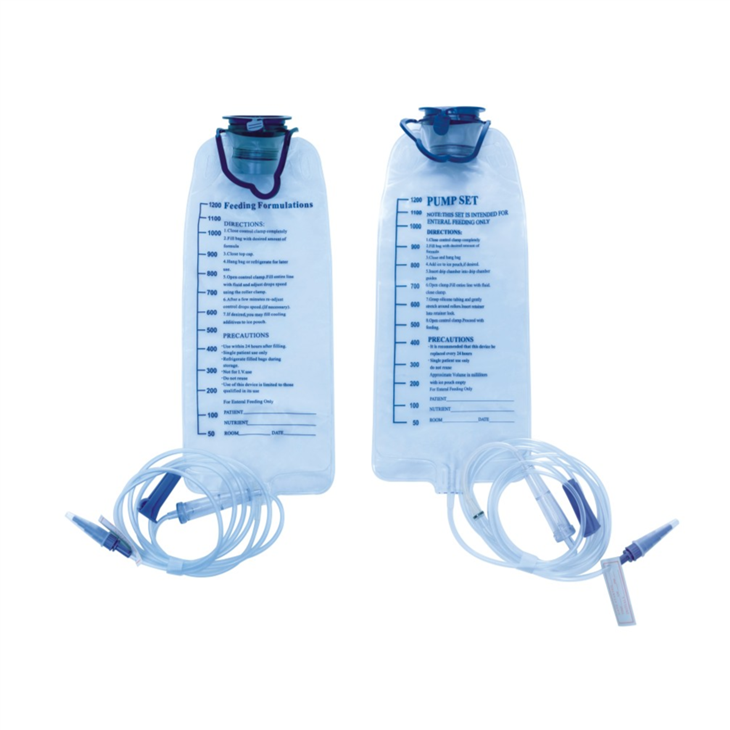


| Disposable Sterile Feeding Bag | ||
|
|
|
|


| Specification & Size | Pipe Length (cm) | Packing | Carton Size | PCS/CTN |
| 500ml | 180 | PE | 55 x 36 x 44 | 100 |
| 1000ml | ||||
| 1200ml | ||||
| 1500ml |
Disposable Feeding Bag
Features
Hygiene Assurance: As a disposable product, it effectively avoids the problems of bacterial growth and cross-infection that may occur due to repeated use. The medical-grade materials used, such as non-toxic plastics that meet the standards, have good chemical stability and will not react chemically with the food or nutritional solution it contains, ensuring safe use.
Convenient and Easy to Use: There is no need for cumbersome cleaning and disinfection steps. It can be used directly after opening the package. Usually, it is designed with clear scale markings, which is convenient for accurately controlling the feeding amount. And it is equipped with easy-to-operate switches or valves, which can flexibly control the flow rate of food or nutritional solution to meet the feeding needs of different patients.
Good Sealing Performance: It has excellent sealing performance, which can effectively prevent the leakage of food or nutritional solution and maintain its freshness and hygiene. The sealing design can also prevent the odor from spreading, creating a relatively comfortable environment for patients and caregivers.
Good Flexibility: The material generally has a certain degree of flexibility, making it easy to fold and store without taking up too much space. During use, it can also better adapt to different placement positions and angles, facilitating the feeding operation.
Economical and Affordable: The cost is relatively low, making it suitable for widespread use in medical institutions, nursing homes, and home care. It not only meets the hygiene requirements but also does not impose an excessive economic burden on users.
Applicable Population
Patients Unable to Eat Independently: Such as comatose patients, patients with severe brain injuries, and patients with swallowing dysfunction. They are unable to obtain nutrition through normal oral feeding methods. The disposable feeding bag can provide them with nutritional support through methods such as nasogastric feeding or gastrostomy.
Postoperative Rehabilitation Patients: After certain surgeries, patients may not be able to eat normally for a while and need enteral nutritional support to supplement the nutrients required by the body, promoting wound healing and physical recovery. The disposable feeding bag can conveniently deliver nutritional solutions to meet the patients' nutritional needs.
The Elderly: Due to the decline in physical functions, some elderly people may have difficulties in chewing or swallowing. Using a disposable feeding bag, food or nutritional solutions can be pureed and fed to ensure that they can obtain sufficient nutrition.
Patients with Special Diseases: Such as patients with neurological diseases causing swallowing difficulties and patients with gastrointestinal diseases requiring special diets can all use the disposable feeding bag to obtain nutrition.
Precautions for Use
Check Product Quality: Carefully check whether the packaging of the disposable feeding bag is intact before use, and see if there are any problems such as damage or air leakage. If any problems are found, replace it immediately to avoid using unqualified products.
Configure Food or Nutritional Solution Correctly: According to the patient's condition and nutritional needs, accurately configure an appropriate amount of food or nutritional solution. Pay attention to the moderate temperature of the food or nutritional solution to avoid irritating the patient's gastrointestinal tract with too cold or too hot substances.
Operate Standardly: Follow the correct operation procedure for feeding. When inserting the nasogastric tube or connecting the gastrostomy tube, be gentle to avoid damaging the patient's mucosa. At the same time, pay attention to adjusting the feeding speed and amount to avoid discomfort symptoms such as vomiting and reflux caused by feeding too quickly or too much.
Pay Attention to Hygiene: During the operation, caregivers should pay attention to hand hygiene and wear protective equipment such as gloves to avoid bacterial contamination. After use, the disposable feeding bag should be properly disposed of in accordance with the regulations for medical waste or household garbage disposal.
Observe the Patient's Reaction: During the feeding process, closely observe the patient's reaction. If discomfort symptoms such as abdominal pain, abdominal distension, nausea, and vomiting occur, stop feeding immediately and notify the doctor in a timely manner for handling.
Hot Tags: disposable feeding bag, China disposable feeding bag manufacturers, suppliers, factory


